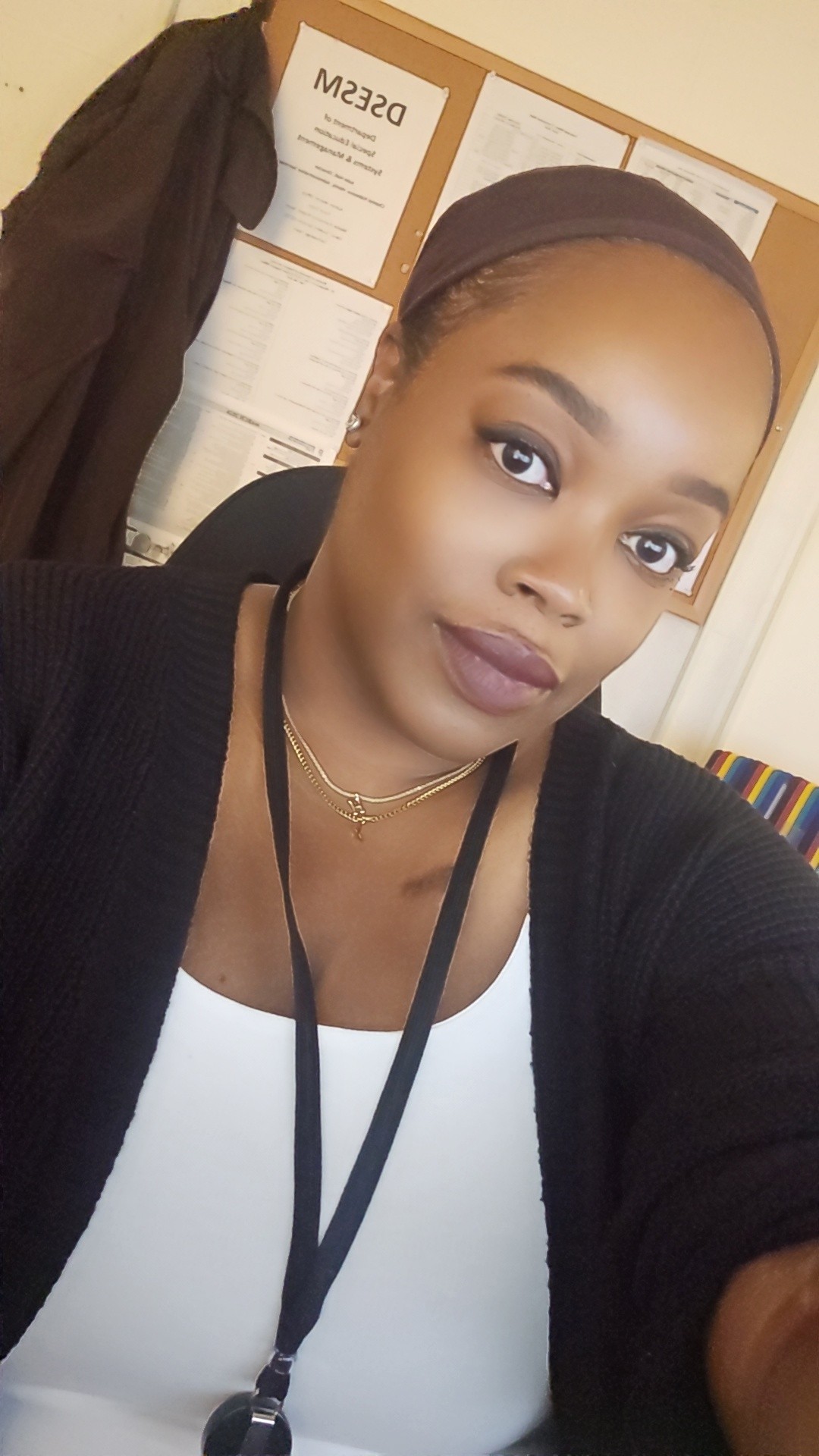
"My oncologists never had a conversation with me about fertility preservation. They were pushing me toward treatment. If I hadn't worked at that fertility clinic, I might never have known to ask — everything would have been different."
— Chantal Kabwasa-Henly, Hodgkin Lymphoma & Uterine Cancer, AdvocateHear More From Chantal:
CHANTAL KABWASA-HENLY'S STORY
Cancer has taken a lot from me, but it has not taken everything. I am a wife, an aunt, an educator, and a loyal friend. I’ve been shaped by the belief that joy is something you choose. Even now, I try to carry that belief with me.
The first time I was diagnosed was with Hodgkin lymphoma. My doctor called while I was at work, and my whole world went still. Life from then on became centered around appointments and chemo — but first and foremost, I focused on preserving my fertility, with the support of a grant from the nonprofit Worth the Wait.
Before my career in education, I’d worked at a fertility clinic, so I knew to freeze my eggs before treatment began. But I was surprised my oncologists never mentioned it; without my previous experience, I might never have known to ask. That gap — between what patients need to know and what they are actually told — became something I couldn’t let go of.
So I decided to share my knowledge as an advocate at Worth the Wait. I’ve spoken in front of hundreds of healthcare providers about my experience, connected fellow patients with oncofertility resources, and made sure no one has to navigate the process in the dark — the way I almost did.
I’ve since received a second diagnosis of uterine cancer. This time, I struggled most with what cancer was threatening to take next: the family my husband and I had been dreaming of for years. As part of treatment, I had to have my uterus fully removed, but my dream of becoming a mother is still very much alive, so we are pursuing surrogacy. It is not the path I imagined, and cancer is the reason the path changed. But it is still a path forward.
When things in life are at their hardest, I always go to the water — a habit of growing up near the coast. I stand at the water’s edge, grieving what cancer has taken, and just let myself be still. The ocean doesn’t ask anything of you, it just says, “everything is going to be okay.” And I know it will be okay; I will be okay.
Help others better understand the experiences of those living with cancer.